
Choosing the right Restaurant Sign Board is a practical branding decision, not merely a decoration choice. A sign must attract attention, communicate quickly, and survive weather, cleaning, heat, and daily handling. For global buyers, material quality, illumination, mounting safety, language clarity, and local installation conditions deserve equal attention.
Industry data supports this investment. Grand View Research reports that the global digital signage market was valued at approximately USD 27.1 billion in 2023, with continued growth expected through 2030. Its analysis highlights stronger demand for dynamic displays, cloud control, and energy-efficient visual communication. Meanwhile, the National Restaurant Association projected United States restaurant and foodservice sales above USD 1 trillion in 2024, showing the scale of competition for customer attention. These figures do not measure every Restaurant Sign Board directly. That limitation matters. Market reports often group digital displays, retail signs, and architectural signage together, so buyers should avoid treating broad forecasts as guaranteed returns.
This guide examines ten sign board options for restaurants serving different climates, budgets, and brand styles. Expect comparisons involving acrylic light boxes, stainless-steel lettering, LED channel letters, wooden fascia signs, neon-style displays, and digital menu boards. A coastal café may need corrosion-resistant hardware, while a street-food shop may value compact visibility above premium finishes. The best choice is rarely the most expensive one. It is the sign that remains readable at dusk, fits the storefront, and supports consistent brand recognition. Some recommendations may still require adjustment after local testing. That is part of responsible purchasing.
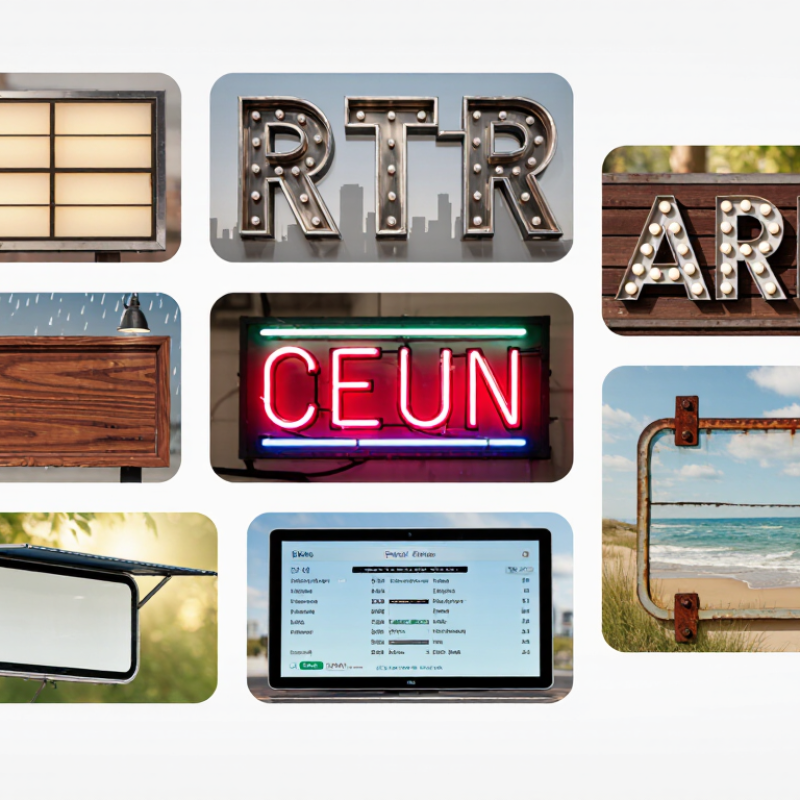
Restaurant sign boards should match the business model, not only the building style. A fascia sign works well for a street-facing restaurant. It creates a clear visual anchor above the entrance. Projecting blade signs help pedestrians notice cafés from side streets. Channel letters suit modern dining spaces with strong nighttime visibility. Freestanding pylon signs serve restaurants set back from busy roads. Their height improves visibility, but installation needs careful site planning.
Different operations need different information. Window graphics suit takeaway shops and display opening hours neatly. A-frame boards work well for daily specials and can move with changing foot traffic. Illuminated menu boards support evening service, while digital displays allow quick price updates. Traditional menu boards often feel warmer and remain easier to maintain. The best choice depends on viewing distance, weather exposure, power access, and cleaning routines. A bright sign can still fail when small lettering disappears in rain. That detail is easy to underestimate.
Tips: Measure the viewing distance before approving artwork. Use high contrast and simple wording. Check materials for heat, moisture, and grease resistance. Request a physical color sample, because screens can mislead. Leave space for future menu changes. An oversized sign may attract attention, yet it can overpower a narrow storefront. Review the design at noon and after dark. Small flaws become obvious then.
10 Best Restaurant Sign Boards for Global Buyers?
Restaurant sign boards face more than daily sunlight. NOAA recorded 28 billion-dollar weather and climate disasters in the United States during 2023. Global buyers should therefore treat weather resistance as a design requirement, not a decorative feature. WMO’s State of the Global Climate 2023 also identified 2023 as the warmest year recorded. Heat, rain, wind, and ultraviolet exposure can quickly reveal weak materials.
Aluminum is a practical choice for front panels and cabinets. It resists corrosion and keeps the structure relatively light. Stainless steel suits coastal locations, but poor finishing can still create staining. Acrylic provides clear color and smooth light diffusion. Polycarbonate offers better impact resistance, although it may yellow without suitable UV protection. Use exterior powder coating with tested adhesion. Specify the coating system, not simply “weatherproof.”
Construction details often decide service life. Welded frames should include clean joints and drainage holes. Silicone seals need compatible grades and careful application. Internal LED modules require protected wiring and controlled heat release. For windy sites, engineers should verify panel area, fixing points, and local wind loads. ASTM G154 and ISO 4892-3 provide recognized methods for accelerated UV exposure testing, but laboratory results are not a promise of unlimited outdoor life. That assumption is risky. Ask for test records, salt-spray evidence, coating thickness, and installation drawings. A sign can look excellent on delivery day, yet fail around fasteners after one wet season. unerquicklich
10 Best Restaurant Sign Boards for Global Buyers?
Essential Design Features for Visibility and Brand Recognition
A restaurant sign board must work before customers read the menu. Strong contrast, generous spacing, and simple lettering improve recognition from moving vehicles. The Sign Research Foundation reports that on-premise signage can generate substantial new business for local establishments. Visibility is not decoration. It is a practical sales tool.
Choose materials according to weather, viewing distance, and installation conditions. Aluminum panels resist moisture, while acrylic faces provide clean color and edge definition. Backlit letters help during evening service, but excessive brightness can reduce readability. Keep the main message short. Three to seven words often work better. Use one dominant color, one supporting color, and a consistent symbol. Small details matter.
Test the board from across the street. Then test it in rain.
A widely cited consumer signage survey found that 68% of customers viewed business signage as an indicator of quality. That connection makes weak typography risky. A crowded board may look informative indoors, yet disappear outdoors. Global buyers should also check electrical specifications, language clarity, mounting strength, and maintenance access. These features support reliable brand recognition across different climates and streetscapes. Still, there is no perfect formula. A design that feels bold in one market may appear loud or confusing in another. Local viewing habits deserve real-world testing.
| No. | Sign Board Type | Best Placement | Typical Recommended Size | Effective Viewing Distance | Illumination Options | Visibility & Brand Recognition Features | Weather Suitability | Key Buying Consideration |
|---|---|---|---|---|---|---|---|---|
| 1 | Fascia Sign Board | Above the main entrance or storefront | 2–8 m wide × 0.5–1.5 m high | 10–40 m | Front-lit, back-lit, or non-illuminated | Large readable lettering, strong contrast, and a consistent logo area create immediate storefront recognition. | Good with aluminum, acrylic, or powder-coated steel construction | Check mounting strength, drainage, electrical access, and local façade restrictions. |
| 2 | Projecting Blade Sign | Perpendicular to the building wall | 0.6–1.2 m wide × 0.8–2 m high | 15–50 m for passing pedestrians and vehicles | Edge-lit, face-lit, or internally illuminated | Two-sided visibility improves recognition from both directions along a street. | Suitable for outdoor use when sealed and corrosion-protected | Confirm projection limits, pedestrian clearance, wind loading, and permit requirements. |
| 3 | Freestanding Pylon Sign | Roadside, parking-lot entrance, or site boundary | 1–3 m wide × 3–10 m high | 50–200 m, depending on height and traffic speed | Internal LED illumination or external floodlighting | Tall proportions, high-contrast graphics, and concise messaging support long-distance wayfinding. | Very good with engineered foundations and weather-resistant panels | Review structural calculations, foundation conditions, wind rating, and local height limits. |
| 4 | Monument Sign | Landscaped entrance, driveway, or forecourt | 1.2–3 m wide × 0.8–2.5 m high | 20–80 m | Low-voltage LED or concealed ground lighting | Solid visual presence, durable finishes, and coordinated colors reinforce a premium identity. | Excellent when built with masonry, aluminum, stone-effect, or composite materials | Allow for landscaping, drainage, foundation work, and visibility from approaching vehicles. |
| 5 | Channel Letter Sign | Retail façade, canopy, or upper storefront | Letter height: 0.3–1.2 m | 20–80 m | Front-lit, halo-lit, or combination LED | Individual letters provide depth, clean outlines, and strong nighttime legibility. | Good for exterior use with sealed wiring and UV-resistant finishes | Specify letter depth, LED color temperature, service access, and energy efficiency. |
| 6 | Lightbox Sign | Storefront, wall, entrance canopy, or roadside frame | 1–6 m wide × 0.5–2 m high | 20–70 m | Internal LED modules or edge lighting | Uniform illumination makes the name and graphic panel readable after dark. | Good when the cabinet has sealed edges and drainage provisions | Compare diffuser quality, brightness uniformity, access panels, and replacement costs. |
| 7 | A-Frame Sidewalk Sign | Sidewalk, pedestrian zone, or entrance approach | 0.45–0.75 m wide × 0.75–1.2 m high | 3–15 m | Usually non-illuminated; reflective film can improve low-light visibility | Portable two-sided messaging supports menus, offers, and directional prompts close to the entrance. | Moderate; use weighted bases and rust-resistant frames outdoors | Check sidewalk width, accessibility rules, wind stability, and daily storage needs. |
| 8 | Window Graphics Sign | Glass doors, windows, and street-facing glazing | Coverage based on available glass area | 3–20 m | Uses ambient or interior lighting | Consistent typography, color blocks, and opening-hour information extend the visual identity to the façade. | Good with UV-resistant vinyl and professionally sealed edges | Preserve interior visibility, emergency egress, cleaning access, and local glazing regulations. |
| 9 | Digital Menu Board | Interior ordering area, drive-through, or sheltered entrance | Screen sizes: 32–65 in diagonal | 2–15 m | Built-in LED display illumination | Motion, photography, and structured layouts attract attention while keeping promotions easy to update. | Indoor or protected outdoor models; outdoor units need suitable ingress protection | Evaluate brightness, viewing angle, operating temperature, connectivity, and content management. |
| 10 | Neon-Style LED Sign | Interior feature wall, bar counter, or covered exterior wall | 0.5–2.5 m wide × 0.3–1.2 m high | 5–30 m | Flexible LED neon tubing or illuminated acrylic | Distinctive outlines, memorable short phrases, and accent colors create a strong photographic focal point. | Good indoors; outdoor installation requires sealed components and suitable protection | Confirm electrical certification, heat management, dimming control, and color consistency. |
Ten leading restaurant sign board options serve different streets, building fronts, and customer habits. Front-lit channel letters offer clear visibility after sunset. Halo-lit letters create a softer, premium appearance. Acrylic box signs provide strong color and simple maintenance. Projecting blade signs catch pedestrians moving along busy sidewalks. Freestanding pylon signs work well near roads and large parking areas. Digital displays can change menus, prices, and promotions quickly. LED neon-style signs add warmth without fragile glass tubing. Illuminated menu boards support quick ordering at entrances. Window graphics use unused glass space effectively. Rooftop signs improve visibility from distant roads, where local rules permit them.
Selection should follow the building, not only the design sketch. Measure viewing distance, mounting height, wind exposure, and available power before production. A sign facing a sunny highway needs stronger contrast than one under an arcade. Outdoor models should resist moisture, dust, and temperature changes. Confirm voltage compatibility with the installation country. Also check language, accessibility, brightness, and planning requirements with local professionals.
Field experience shows that bright is not always better. Excessive glare can hide lettering and disturb nearby homes. Poor cable access can turn a simple repair into an expensive visit. I have also seen attractive window graphics fail because condensation was ignored. Small details matter. Ask for material samples, lighting tests, load calculations, maintenance access, and a clear warranty. A slightly less dramatic sign may perform better for ten years. That trade-off deserves honest review.
Comparison of representative outdoor service-life midpoints for ten widely used restaurant sign board options. Actual performance depends on climate, installation quality, maintenance, and operating hours.
Service-life figures are indicative midpoints based on commonly reported industry ranges for outdoor sign materials and lighting systems.
For global buyers, restaurant sign boards should be compared by total cost, not unit price alone. A basic flat panel may cost less, while illuminated letters need wiring, power supplies, mounting frames, and stronger packaging. Request an itemized quotation covering artwork, tooling, freight volume, installation hardware, and replacement parts. Details matter. A low quote can hide expensive shipping or weak components.
Customization should match the building and viewing distance. Confirm exact dimensions, colors, fonts, logo files, lighting temperature, and surface finish. Ask for a scaled drawing before production. For outdoor boards, discuss aluminum thickness, acrylic quality, drainage, wind load, and an appropriate weather-resistance rating. A sample photo is useful, but it is not enough. Physical samples can reveal uneven lighting, rough edges, or color differences.
Compliance varies by destination, city, and installation site. Check local sign permits, electrical requirements, fire performance, structural limits, and restrictions on brightness or operating hours. Ask suppliers for material data, wiring diagrams, test reports, and clear warranty terms. Supplier evaluation should include production photos, quality-control steps, lead times, export packaging, and after-sales response. Ask for a pre-shipment inspection. That gap matters. Some suppliers answer quickly but provide vague documents. I have also seen buyers approve attractive mockups before checking mounting access. Reconsider the quote when tolerances, replacement procedures, or responsibility for installation remain unclear.
A fascia sign creates a clear visual anchor above the entrance. Keep the wording simple and readable from across the street.
Use it when pedestrians approach from side streets. Its outward angle improves visibility near cafés and narrow storefronts.
Yes, they provide strong nighttime visibility. Confirm wiring access, lighting temperature, mounting strength, and local brightness limits.
A freestanding pylon sign can improve visibility from passing traffic. Check site space, wind exposure, foundations, and installation access.
Window graphics display opening hours neatly. A-frame boards can show daily specials and move with changing foot traffic.
Compare total cost, not only the unit price. Include artwork, tooling, freight volume, hardware, installation, and replacement parts.
Confirm dimensions, colors, fonts, lighting temperature, surface finish, and logo files. Request a scaled drawing first.
Discuss aluminum thickness, acrylic quality, drainage, wind load, and weather resistance. Physical samples reveal rough edges and uneven lighting.
Check local permits, electrical requirements, fire performance, structural limits, brightness rules, and operating hours. Requirements vary by location.
Vague documents and unusually low quotes deserve caution. A beautiful mockup may hide weak components or difficult mounting access. Recheck everything.
Choosing the right Restaurant Sign Board is essential for attracting customers, strengthening brand recognition, and supporting smooth daily operations. This guide explores sign board types suited to different restaurant formats, including storefront signs, projecting signs, illuminated displays, menu boards, and portable options. It also explains how materials, construction methods, lighting systems, mounting structures, and weather resistance affect durability and long-term performance in different climates.
The article presents ten practical restaurant sign board options for global buyers, comparing their visibility, maintenance needs, customization possibilities, and suitability for indoor or outdoor use. It also covers key design features such as typography, color contrast, layout, illumination, and readability from a distance. Finally, buyers will learn how to assess pricing, production quality, installation requirements, regulatory compliance, delivery reliability, and supplier communication before placing an order.
